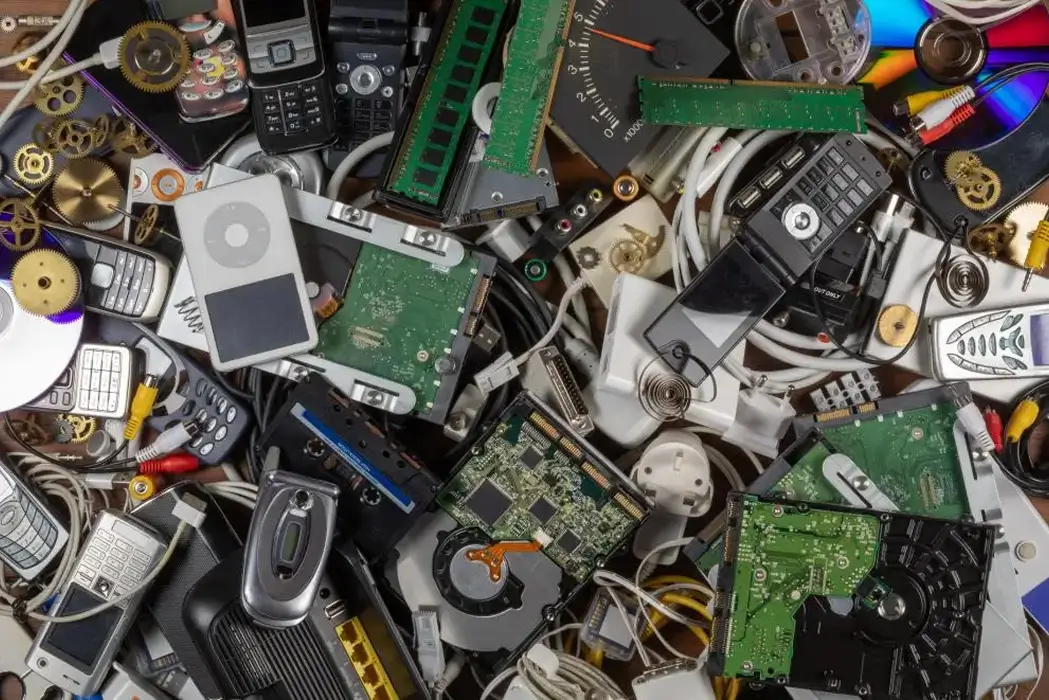
Lithium-ion battery disposal is the safe, legal end-of-life handling of Li-ion batteries , mandatory recycling through CPCB-authorized channels under India’s Battery Waste Management Rules 2022.
It applies to phones, laptops, power banks, EVs, e-bikes, and any other Li-ion-powered device.
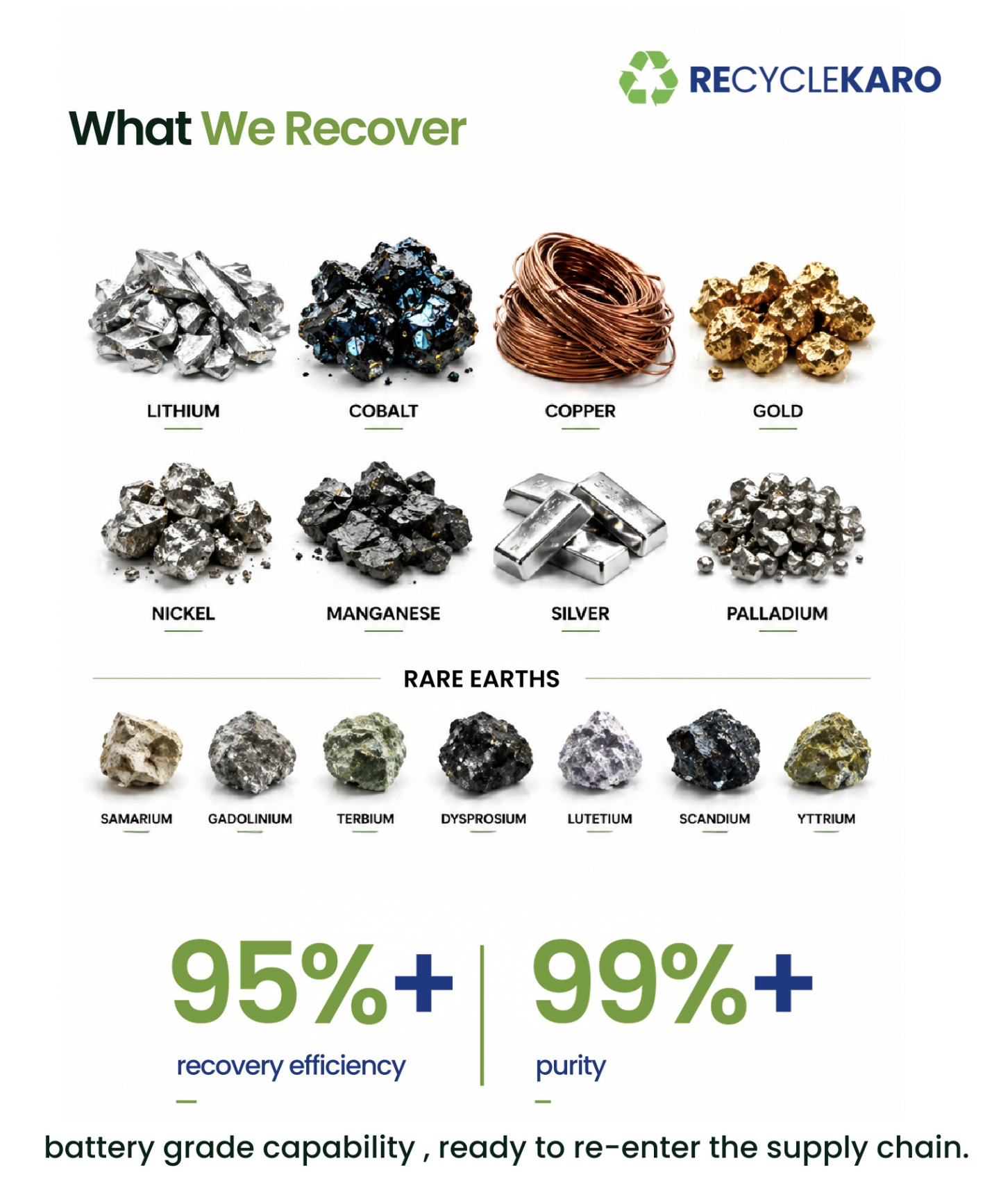
Landfilling and household trash disposal are prohibited due to fire risk and toxic leaching. RecycleKaro offers doorstep pickup across 12,000+ collection touchpoints in India, with 95%+ material recovery at India’s largest end-to-end lithium-ion recycling facility.
Why Lithium-Ion Battery Disposal Is Different
Lithium-ion battery disposal isn’t like alkaline or lead-acid disposal. Three properties make it a special-handling category:
1. Thermal runaway risk. A damaged Li-ion cell can undergo thermal runaway, a self-sustaining chemical reaction producing intense heat, toxic gas, and fire that’s difficult to extinguish. This is why Li-ion cells in general waste have caused documented fires in waste trucks, transfer stations, and material recovery facilities across India and globally.
2. High material value. A single Li-ion battery contains lithium, cobalt, nickel, and manganese, critical minerals India imports over 90% of. Battery-grade recovered materials substitute virgin imports and directly support India’s clean energy supply chain. Proper lithium-ion battery disposal isn’t waste management; it’s urban mining.
3. Regulatory scrutiny. Under the Battery Waste Management Rules 2022 (as amended in 2024 and 2025), lithium-ion is the category CPCB monitors most actively. EPR recovery targets reach 90% from FY 2026-27, yet only around 3% of India’s end-of-life Li-ion is currently formally recycled, creating substantial enforcement pressure.
That combination, fire risk, material value, active regulation, is why lithium-ion battery disposal cannot follow generic battery workflows.
Types of Lithium-Ion Batteries and Where You’ll Find Them
Not all lithium-ion batteries are the same. Common chemistries in India:
- NMC (Lithium Nickel Manganese Cobalt Oxide) – most common in smartphones, laptops, power banks, and electric cars. Contains cobalt and nickel, the highest-value recovery materials.
- LFP (Lithium Iron Phosphate) – increasingly used in Indian EVs (Tata, Mahindra, some Ola scooters), home energy storage, and BESS systems. No cobalt; safer chemistry but lower recovery value.
- LCO (Lithium Cobalt Oxide) – older smartphones and consumer electronics. High cobalt content.
- NCA (Lithium Nickel Cobalt Aluminum Oxide) – Tesla-style EVs, some premium electronics.
- LMO (Lithium Manganese Oxide) – older power tools, some e-bikes, medical devices.
Where you’ll find lithium-ion batteries in your daily life:
- Mobile phones, tablets, smartwatches
- Laptops and Bluetooth accessories
- Power banks, wireless earbuds, cameras
- E-bikes, e-scooters, hoverboards
- EV cars, two-wheelers, three-wheelers
- Cordless power tools and gardening equipment
- Home solar and inverter systems (increasingly)
- Drones and hobby equipment
If it’s rechargeable, portable, and lasts more than a few hours between charges, it’s almost certainly lithium-ion.
The Lithium-Ion Battery Disposal Process [Step by Step]
Follow this workflow for any Li-ion battery in normal (undamaged) condition:
Step 1: Prepare the Battery
- Remove the battery from the device if it’s user-removable. For sealed devices (most modern phones and laptops), leave the battery inside.
- Tape the terminals with electrical tape or clear tape. This prevents accidental short-circuits during transport.
- Store in a non-metal, non-flammable container. A cardboard box or plastic bag works. Do not store loose in a drawer with keys, coins, or other batteries.
- Keep away from heat – no direct sunlight, no near-cooking-area storage, no car dashboards.
- Do not attempt to open or discharge the cell. Li-ion batteries are not designed for user disassembly.
Step 2: Choose a Disposal Channel
You have four compliant channels for lithium-ion battery disposal in India:
- RecycleKaro doorstep pickup – Schedule via the Sell Your E-Waste portal. Available across 12,000+ collection touchpoints in India. Residual value paid for phones, laptops, and larger packs.
- Manufacturer take-back programs – Apple’s Recycling Program, Samsung Re+, Xiaomi Mi Recycle, OnePlus Trade-In, Dell Reconnect, and HP Planet Partners all operate in India.
- CPCB-registered e-waste collection centers – walk-in drop-off points in most Indian metros.
- Retail collection bins – Croma, Reliance Digital, and select Vijay Sales outlets accept household batteries.
Step 3: Prepare Your Device (If Applicable)
Before handing over a phone, laptop, or tablet:
- Factory reset the device to clear personal data
- Sign out of accounts (iCloud, Google, Samsung account)
- Remove SIM and memory cards – these are not recycled with the device
- Unlink Find My iPhone / Find My Device to allow the recycler to process the unit
For enterprise IT asset disposal, RecycleKaro’s e-waste service includes certified data destruction with chain-of-custody documentation.
Lithium-Ion Battery Disposal by Device Type
Different Li-ion devices need different handling. Here’s the workflow for each.
How to Dispose of a Mobile Phone Battery
Most smartphones sold in India after 2016 have sealed lithium-ion batteries integrated into the device. Do not attempt removal, you risk puncturing the cell, which can trigger thermal runaway.
The workflow:
- Factory reset the phone
- Remove SIM and memory cards
- Hand the entire phone (with battery inside) to a certified recycler
- Use RecycleKaro’s Sell Your E-Waste portal for doorstep pickup, with residual value based on brand, condition, and age
For older feature phones with removable batteries: pop the battery out, tape the terminals, and dispose separately from the device chassis.
How to Dispose of a Laptop Battery
Modern laptops (post-2018) typically have sealed batteries not designed for user removal. Options:
- Sealed-battery laptops: Do not attempt removal. Give the entire laptop to a certified recycler; the battery will be safely extracted during professional dismantling.
- Removable-battery laptops (older ThinkPads, some Dells): Remove the battery, tape the contacts, dispose separately at a CPCB-authorized e-waste center or via RecycleKaro pickup.
- Manufacturer programs: Dell Reconnect, HP Planet Partners, Lenovo Asset Recovery Services, and Apple Recycling all operate India-based take-back for their branded devices.
Always perform a factory reset or secure data wipe before handing over. For business IT refresh cycles, use RecycleKaro’s certified enterprise e-waste service includes data destruction certificates.
How to Dispose of Electric Vehicle (EV) Batteries
EV battery packs, lithium-ion, weighing between 20 kg (two-wheeler) and 400 kg (car), require specialized handling that individuals should never attempt.
What to do:
- Never handle a full EV pack yourself. This is a workshop-only operation involving high-voltage disconnection protocols.
- Coordinate through your vehicle OEM’s authorized service network. Tata Motors, Mahindra Electric, MG, Ola Electric, Ather Energy, Hero Electric, and Bajaj Auto all operate authorized end-of-life programs in India.
- Check second-life eligibility. Under the 2025 Battery Waste Management Rules amendments, EV packs may qualify for second-life applications — stationary energy storage or home ESS — before final recycling. This can extend useful life and reduce disposal cost.
- For damaged EV packs from accidents: the vehicle OEM handles safety-controlled removal and transport. Never attempt DIY removal.
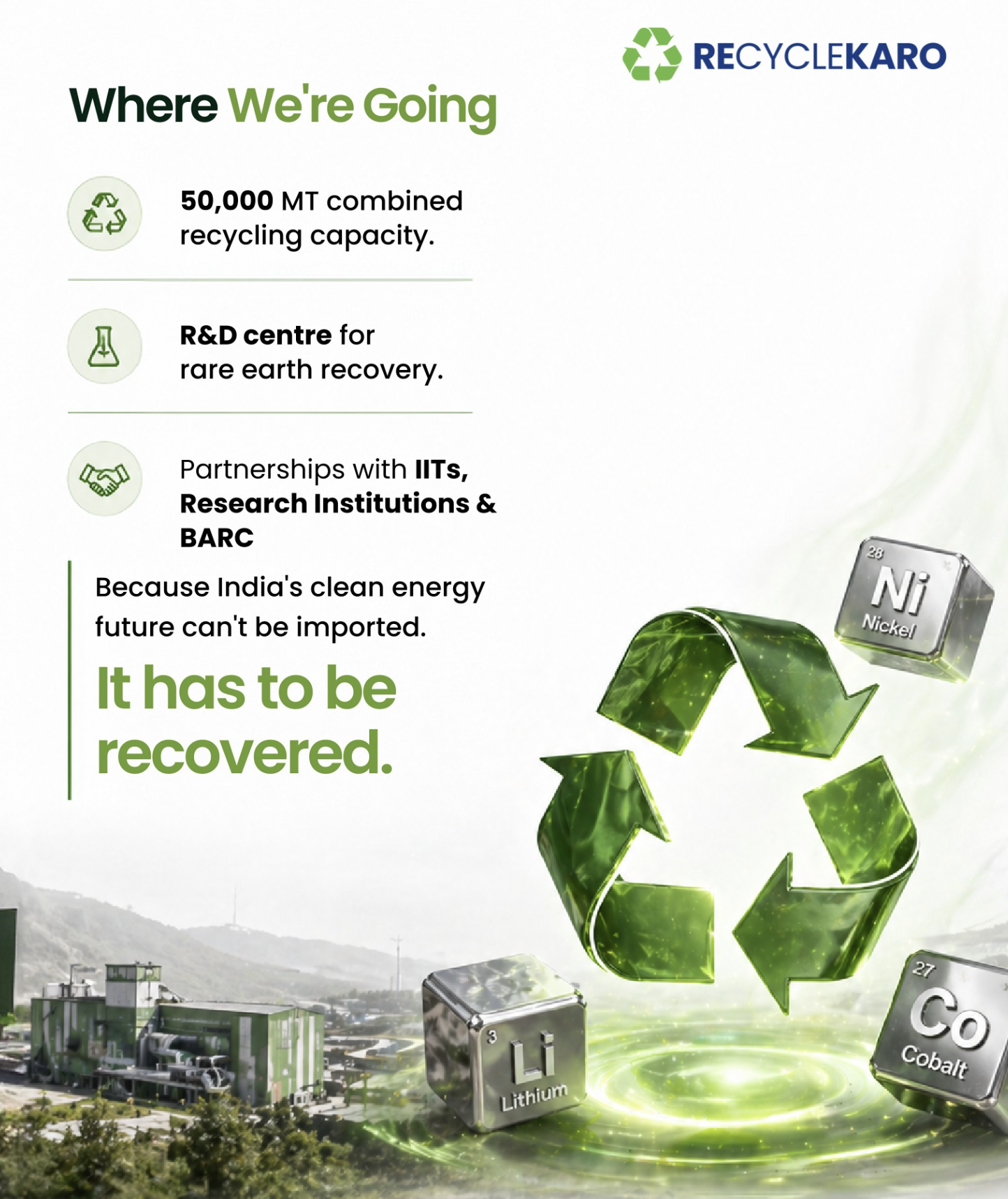
RecycleKaro processes EV battery packs at its 17-acre integrated facility in Palghar, Maharashtra recovering battery-grade cobalt sulphate, nickel sulphate, and lithium carbonate at 95%+ efficiency. OEMs and fleet operators can arrange bulk pack processing via RecycleKaro’s lithium-ion battery recycling program.
How to Dispose of E-Bike and E-Scooter Batteries
E-bike and e-scooter batteries are typically removable Li-ion packs weighing 3–10 kg. Handling steps:
- If the battery is removable (most Indian e-scooter models – Ather, Ola, Bounce): remove the pack per the manufacturer’s instructions, do not power-cycle a suspected-damaged pack, and route through the OEM’s take-back program or RecycleKaro pickup.
- If the pack is integrated (some higher-end e-bikes): treat the entire vehicle as e-waste and coordinate with the OEM.
- Never store a suspect pack indoors. E-scooter fires have been documented cases in Indian residential buildings, usually from continued charging of damaged packs.
If your e-vehicle battery has swelled, will not hold charge, or has been in an accident, treat it as damaged and follow the hazmat protocol below.
How to Dispose of Power Bank, Camera, and Wireless Earbud Batteries
These small-format Li-ion cells are the most commonly mishandled category, often thrown in trash because they seem too small to matter. They aren’t.
- Power banks: Do not attempt to open. Tape any exposed USB or charging ports. Dispose whole via e-waste channels.
- Digital camera batteries: Removable; tape terminals, dispose in bulk via RecycleKaro pickup or e-waste collection.
- Wireless earbuds: The case and buds both contain small Li-ion cells. Do not attempt to separate. Give the entire set to a certified recycler.
- Smartwatches and fitness trackers: Sealed devices – treat like a phone. Factory reset, then hand over the entire unit.
How to Dispose of Power Tool Batteries
Cordless drill, saw, and gardening equipment batteries (Bosch, Makita, Milwaukee, Stanley) are typically Li-ion or older NiMH/NiCd chemistries.
- Li-ion power tool batteries: Standard Li-ion protocol – tape terminals, non-metal storage, route through e-waste channels or the OEM take-back (Bosch and Makita both operate India programs).
- Older NiCd/NiMH tool batteries: Same disposal channel but chemically distinct – mention the chemistry when handing over so the recycler routes correctly.
How to Dispose of Home Energy Storage (BESS) Batteries
Home solar and stationary energy storage systems increasingly use Li-ion (typically LFP) chemistry. Pack sizes range from 5 kWh residential to 100+ kWh commercial.
- Never attempt DIY removal. BESS packs operate at high voltage and require certified electrician disconnection.
- Coordinate through the installer or system OEM (Luminous, Su-vastika, Livguard, Exide Energy).
- For commercial BESS decommissioning: Contact RecycleKaro directly – this is a scheduled, engineered handover, not a walk-in service.
How to Handle a Damaged, Leaking, or Punctured Lithium-Ion Battery
This is the highest-risk disposal scenario in the entire Li-ion category. Signs your battery is damaged:
- Visible swelling or bulging of the cell or device casing
- Hissing sounds or venting
- Unusual heat when the device is idle
- Electrolyte odor — fishy, ether-like, or sweet chemical smell
- Visible casing damage, punctures, or dents
- Device becomes unusually hot during normal use
- Battery no longer holds any charge, or discharges within minutes
If any of these apply, follow this sequence:
1. Do not charge the battery. Charging a damaged Li-ion cell can trigger thermal runaway within minutes. Disconnect any charger immediately.
2. Isolate the battery. Place it in a fireproof container — a metal bucket or ceramic pot — filled with dry sand or vermiculite. This is the IATA-approved emergency containment method for compromised Li-ion cells.
3. Move outdoors to a well-ventilated area away from flammable materials, gas cylinders, vehicles, and building entrances.
4. Do not use water. Li-ion battery fires require dry-agent suppression. Water can worsen the reaction and does not extinguish a lithium fire.
5. Contact a certified recycler immediately. RecycleKaro’s safety team arranges hazmat pickup for damaged Li-ion cells with appropriate protocols and hazmat-compliant transport.
6. Never ship damaged Li-ion via general courier. This violates hazardous goods regulations under the Central Motor Vehicles Rules and is a documented cause of courier vehicle fires. Ship only through hazmat-certified logistics operators.
If a battery starts to smoke, hiss loudly, or emit flames, evacuate the area immediately and call emergency services. Do not attempt to move a burning Li-ion cell.
What Happens After Lithium-Ion Battery Disposal [The Recycling Process]
Understanding the recycling process helps clarify why using an authorized facility matters. At RecycleKaro’s Palghar plant, end-of-life Li-ion batteries go through a multi-stage recovery process:
- Safe intake and discharge – batteries are safely discharged to eliminate residual charge before mechanical processing.
- Mechanical shredding – cells are shredded under controlled atmosphere to produce black mass, a concentrated mixture of cathode and anode materials.
- Hydrometallurgical processing – black mass is dissolved in acid leach solutions to extract dissolved metal ions.
- Selective separation – cobalt, nickel, lithium, and manganese are separated and precipitated into battery-grade sulphates and carbonates.
- Final refining – recovered materials meet purity standards (99%+) required for use in new battery cathodes.
The output – battery-grade cobalt sulphate, nickel sulphate, and lithium carbonate, feeds directly back into new battery manufacturing, replacing virgin imports.
India recovers approximately 95%+ of critical materials from Li-ion batteries processed at facilities like RecycleKaro’s, closing the loop between disposal and manufacturing.
This is why disposal through an authorized recycler isn’t just compliance, it’s supply chain participation.
Lithium-Ion Battery Disposal Rules in India [The 2026 Compliance Framework]
Lithium-ion battery disposal falls under the Battery Waste Management Rules, 2022, notified by the Ministry of Environment, Forest and Climate Change (MoEFCC) under the Environment (Protection) Act, 1986. Amendments in 2024 and 2025 substantially strengthened the framework.
Extended Producer Responsibility (EPR) for Li-Ion
Every producer, importer, and manufacturer of lithium-ion batteries in India must:
- Register on the CPCB EPR portal
- Meet annual recovery targets
- Purchase EPR certificates from CPCB-registered recyclers to cover any shortfall
- File annual returns by June 30 each year
EPR Recovery Targets
| Financial Year | Recovery Target |
|---|---|
| FY 2024-25 | 70% |
| FY 2025-26 | 80% |
| FY 2026-27 onwards | 90% |
At 90%, India’s target is among the most ambitious battery recovery mandates globally. Yet only around 3% of India’s end-of-life lithium-ion batteries are currently formally recycled, creating substantial enforcement pressure and commercial opportunity for authorized recyclers.
2025 Amendments – What Changed
- Second-life recognition: Refurbished Li-ion batteries used in stationary energy storage (BESS, home ESS) are formally recognized as a valid intermediate use before end-of-life recycling.
- Continuous compliance monitoring: EPR is no longer a year-end filing exercise. Digital tracking on the CPCB portal enables real-time compliance verification.
- Recycled content mandate (from FY 2027-28): New Li-ion batteries manufactured in India must contain minimum percentages of recycled lithium, cobalt, and nickel recovered domestically.
Penalties for Non-Compliance
- Environmental Compensation up to ₹1 lakh per day for continuing violations
- Suspension of CPCB registration — halts the legal ability to sell or import Li-ion batteries
- Prosecution under the Environment (Protection) Act, 1986
Businesses under EPR obligation should treat compliance as continuous operational work. RecycleKaro’s EPR Li-Ion battery program handles CPCB portal registration, certificate generation, and quarterly reporting for OEMs, importers, and bulk consumers.
Common Challenges in Li-Ion Battery Disposal in India
Even with clear regulations, practical barriers slow down compliance:
- Low consumer awareness of fire risk. Most people don’t know a swollen phone battery is a fire hazard until an incident occurs. Educational gaps drive most incorrect disposal.
- Sparse authorized collection infrastructure. Outside metros, walk-in Li-ion collection points remain limited — which is why doorstep pickup has become the practical primary channel.
- Damaged battery handling gaps. Consumers with swollen phone batteries frequently attempt to store them at home or ship them via general courier — both create serious risk.
- Informal sector interference. A majority of end-of-life Li-ion batteries in India still flow through informal channels that lack safety controls and produce no material recovery.
- EV end-of-life uncertainty. India’s first large wave of end-of-life EV batteries hits around 2028–2032. Infrastructure is still scaling to meet that wave, creating current-state ambiguity for early EV adopters.
The 2025 BWMR amendments address enforcement through continuous digital monitoring, but consumer-facing infrastructure remains the largest practical gap — one that authorized recyclers like RecycleKaro are actively closing through doorstep pickup and expanded collection touchpoints.
Making Li-Ion Disposal Simple! What to Do Next
You now know the type of Li-ion battery you have, the safety steps to follow, and what the 2026 rules require. The last step is actually doing it and this is where most people get stuck, because locating an authorized Li-ion collection point locally is genuinely difficult.
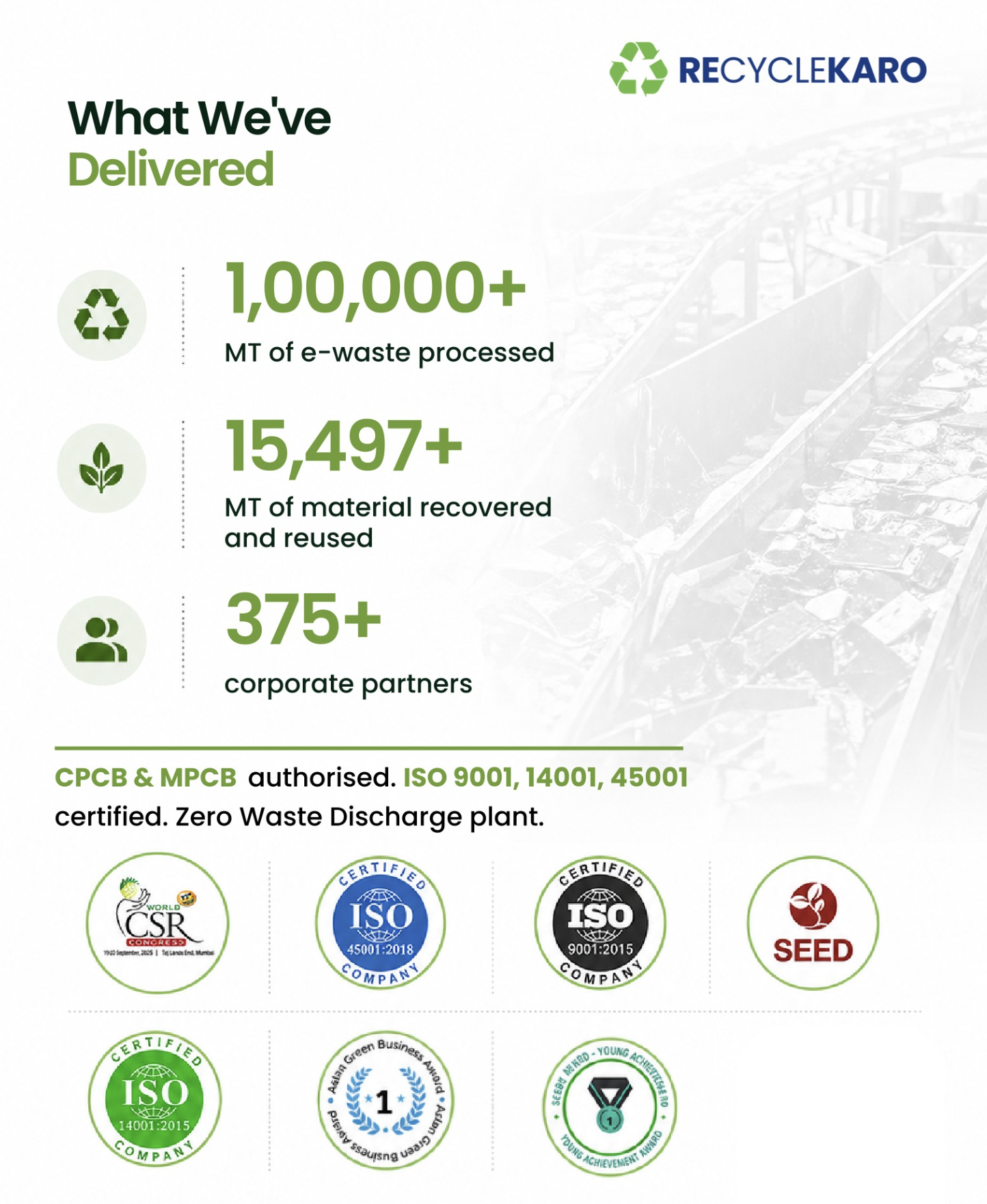
RecycleKaro removes that friction: doorstep pickup for household Li-ion batteries, hazmat-compliant handling for damaged cells, full CPCB and MPCB authorization, and 95%+ material recovery at India’s largest end-to-end Li-ion recycling facility.
For individuals – phones, laptops, power banks, e-bike batteries, or other household Li-ion to dispose of:
→ Schedule a Doorstep Pickup with RecycleKaro
Available across 12,000+ collection touchpoints in India. Residual value paid for laptops, phones, and larger battery packs based on condition and weight.
For businesses — EV OEMs, battery manufacturers, importers, data centers, or bulk consumers under EPR obligation:
RecycleKaro handles CPCB portal registration, EPR certificate generation, quarterly reporting, and end-to-end lithium-ion battery recycling. FY 2026-27 recovery target is now 90%, compliance can no longer be a year-end task.
Have a damaged, swollen, or leaking Li-ion battery? Don’t charge it. Don’t ship it. Contact RecycleKaro’s safety team – we’ll arrange on-site hazmat collection with appropriate protocols.