

IT asset disposition (ITAD) is the secure, documented, and auditable process of retiring end-of-life IT equipment like laptops, servers, storage drives, and mobile devices so that data is permanently destroyed, regulatory obligations are met, and recoverable materials re-enter the supply chain.
A certified ITAD process maintains a chain of custody from collection to final disposal, issues a Certificate of Data Destruction for every serialized asset, and follows standards such as NIST 800-88. In India, ITAD now carries dual compliance weight: data-erasure obligations under the Digital Personal Data Protection (DPDP) Act, 2023, and authorized-recycler obligations under the E-Waste (Management) Rules, 2022.
[DPDP Act 2023; E-Waste Rules 2022]
What Is IT Asset Disposition (ITAD)?
IT asset disposition is the structured retirement of technology hardware once it reaches end of life through secure data destruction, refurbishment, remarketing, or environmentally responsible recycling, all under a documented chain of custody. It is the final stage of the IT asset lifecycle, and the point at which a device permanently leaves the organization’s control.
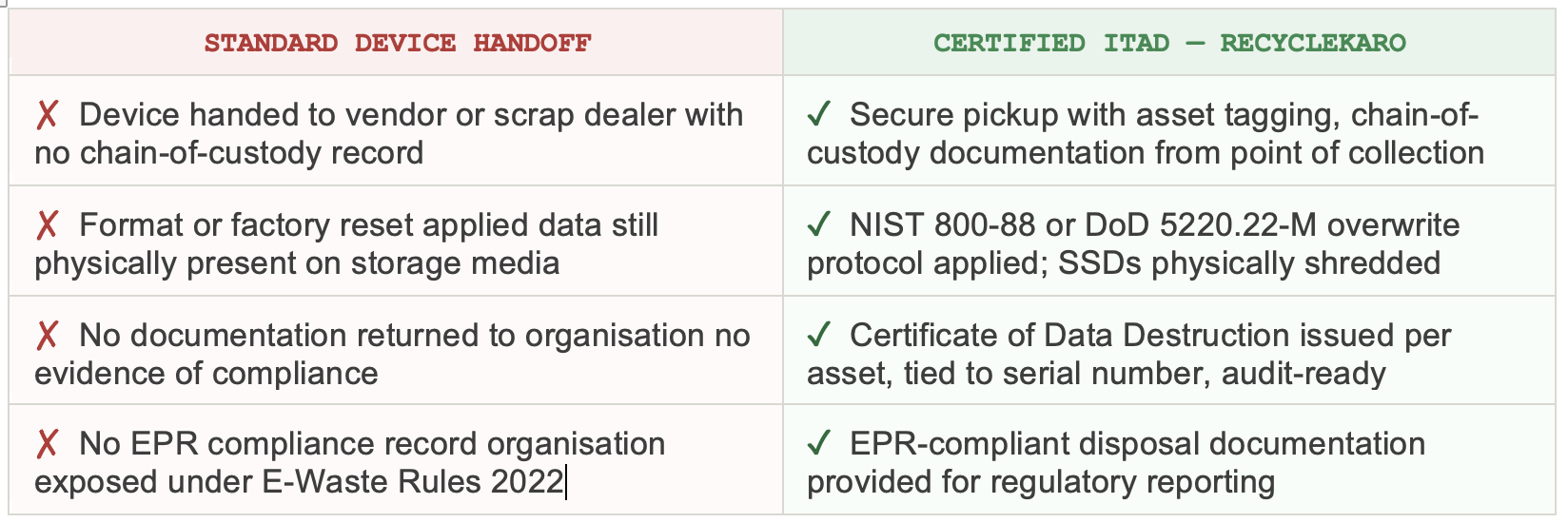
The distinction that matters most for Indian enterprises is between handing equipment to a scrap vendor and certified disposition. A genuine ITAD process tracks every asset by serial number from collection to final outcome, applies a defensible data-destruction method, and returns auditable proof. A scrap handoff returns nothing.
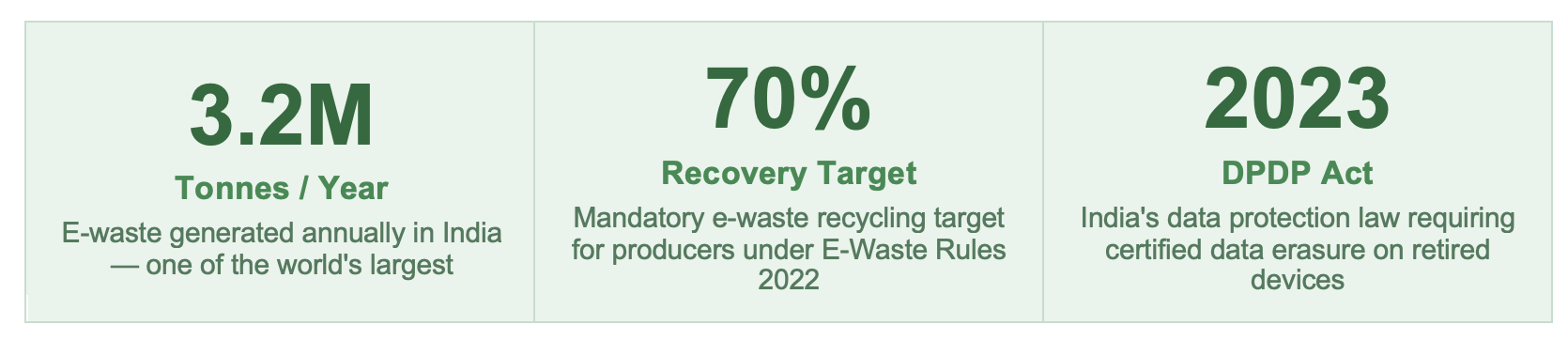
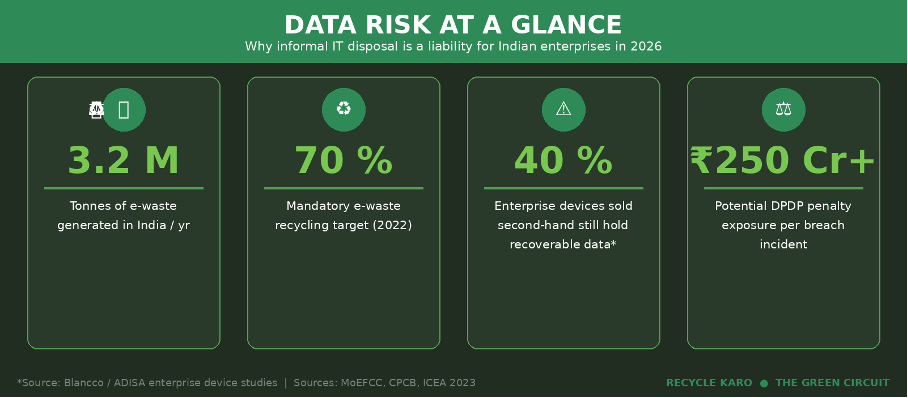
Fig. 1 — India’s corporate e-waste landscape | Sources: MoEFCC, CPCB, ICEA 2023
ITAD vs. IT Asset Management (ITAM): what’s the difference?
ITAM tracks and optimizes assets while they are in use – procurement, deployment, maintenance, license management. ITAD governs what happens at the end of that lifecycle.
ITAM tells you what you own; ITAD ensures that what you stop owning leaves securely and compliantly. The two connect: a clean ITAM inventory is what makes serial-level ITAD documentation possible.
Which devices require IT asset disposition?
Any data-bearing or hazardous end-of-life equipment: desktops and laptops, servers and storage arrays, networking gear, smartphones and tablets, backup tapes, and increasingly lithium-ion batteries from UPS and device fleets.
Refresh cycles, lease expiries, mergers, data-center decommissioning, and employee offboarding are the most common triggers.
Why Does IT Asset Disposition Matter for Indian Enterprises in 2026?
India is now among the world’s largest generators of end-of-life electronics. The Central Pollution Control Board recorded roughly 13.97 lakh tonnes (about 1.4 million MT) of e-waste in FY 2024–25, up from 12.54 lakh tonnes the year before.
Every refresh cycle pushes thousands of corporate devices out of active use and most carry years of recoverable corporate data.
Why isn’t a factory reset enough to erase corporate data?
A factory reset removes the address of the data, not the data itself. The files remain physically present on the storage media and are recoverable with widely available forensic tools. For a single lost phone that is an inconvenience; for hundreds of decommissioned laptops it is a regulatory and reputational exposure.
Independent testing of second-hand enterprise devices has repeatedly recovered sensitive data from drives that were reset or formatted before resale.
What are the risks of improper IT asset disposal?
Three exposures stack on top of each other:
- Data breach. The global average cost of a data breach reached roughly US $4.4 million, with the United States far higher. [IBM Cost of a Data Breach Report 2025 ] Improper end-of-life handling is among the most preventable causes.
- Regulatory liability under the DPDP Act and the E-Waste Rules (detailed below).
- Reputational and audit risk, especially in regulated sectors where an incident invites scrutiny from sectoral regulators.
How Does the IT Asset Disposition Process Work?
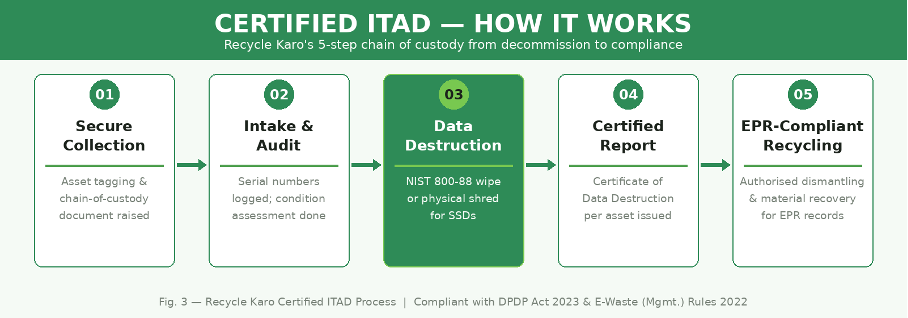
A certified ITAD program runs as a sequential, logged workflow rather than a single handoff.
|
Stage |
What happens |
What it produces |
|---|---|---|
|
1. Inventory & tagging |
Retired assets catalogued by serial number, model, and storage type |
Asset manifest |
|
2. Secure collection |
Devices collected under controlled, tracked transport |
Pickup record |
|
3. Chain of custody |
Custody logged at every transfer point |
Custody trail |
|
4. Data destruction |
Method matched to media type (wipe / degauss / shred) |
Certificate of Data Destruction |
|
5. Disposition |
Resale, refurbishment, or compliant dismantling |
Disposition record |
|
6. Material recovery |
Metals and components recovered and returned to supply chain |
EPR-compliant disposal record |
What is chain of custody in ITAD?
Chain of custody is the unbroken, documented record of who handled each asset, when, and where from de-installation through final disposition. Without it, an organization cannot prove what happened to a device after handover, which is precisely the gap auditors and regulators probe. Most companies discover their custody trail ends at the loading dock.
What is a Certificate of Data Destruction?
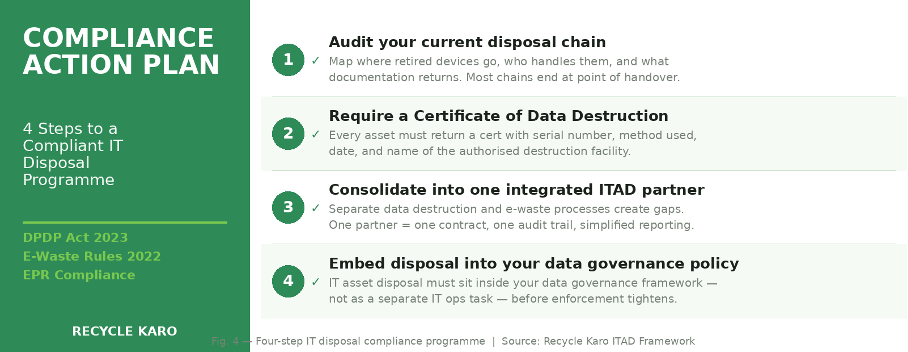
It is the formal proof that data on a specific asset was destroyed. A valid certificate carries the device serial number, the destruction method used, the date, and the name of the authorized facility. Without serialized certificates, an enterprise has no evidence of compliance under either the DPDP Act or the E-Waste Rules.
What Data Destruction Methods Are Used in ITAD?
Certified providers match the method to the storage medium, following recognized standards.
|
Method |
How it works |
Best for |
Standard |
|---|---|---|---|
|
Software wiping |
Overwrites storage so data cannot be reconstructed |
Reusable HDDs slated for resale |
NIST 800-88 (Clear/Purge) |
|
Degaussing |
Disrupts the magnetic field, rendering media unreadable |
Magnetic HDDs, tapes |
NIST 800-88 (Purge) |
|
Physical destruction / shredding |
Media is physically destroyed |
SSDs and any drive not being reused |
NIST 800-88 (Destroy); DoD 5220.22-M |
Do SSDs require physical destruction?
Generally, yes. Solid-state drives cannot be reliably overwritten using traditional magnetic-era methods because of wear-leveling and over-provisioning. For SSDs, cryptographic erase where supported, or physical destruction (shredding), is the accepted standard. A capable provider handles every media type and documents the method per asset.
What Compliance Laws Govern IT Asset Disposal in India?
This is where India-specific obligations make ITAD a legal requirement rather than a best practice and where most organizations are managing neither dimension properly.
How does the DPDP Act, 2023 apply to device disposal?
The Digital Personal Data Protection Act, 2023 places a direct obligation on data fiduciaries to erase personal data once the purpose for which it was collected is fulfilled. [DPDP Act 2023, MeitY] That obligation extends to personal data stored on physical media. Authorizing the disposal of a decommissioned server without certified data destruction is not just a process gap, it is potential non-compliance with the law.
What do the E-Waste (Management) Rules, 2022 require from bulk consumers?
India’s E-Waste (Management) Rules, 2022, in force since April 1, 2023, place obligations on organizations as bulk consumers of electronic equipment. [CITE: E-Waste (Management) Rules 2022, MoEFCC]
Above a specified threshold, companies must hand end-of-life electronics only to authorized dismantlers and recyclers and maintain records of compliance under the EPR regime. The result is a two-dimensional obligation: data-privacy liability under the DPDP Act and e-waste compliance under the E-Waste Rules, best handled by a single authorized partner rather than two bolted-together processes.
Sector-specific obligations: BFSI, healthcare, and government IT
Organizations handling especially sensitive data banking and financial services, healthcare, legal, and government-adjacent IT often sit under additional sectoral data-handling requirements from regulators such as SEBI, RBI, and IRDAI. In these environments a certified, documented, auditable disposal trail is the minimum standard, not an upgrade.
What Certifications and Standards Should an ITAD Provider Have?
Certifications separate a genuine ITAD partner from a recycler with a logo.
- Data destruction: adherence to NIST SP 800-88 and, where required, DoD 5220.22-M; internationally, NAID AAA for data destruction.
- Environmental & recycling: R2v3 responsible-recycling certification; ISO 14001 environmental management.
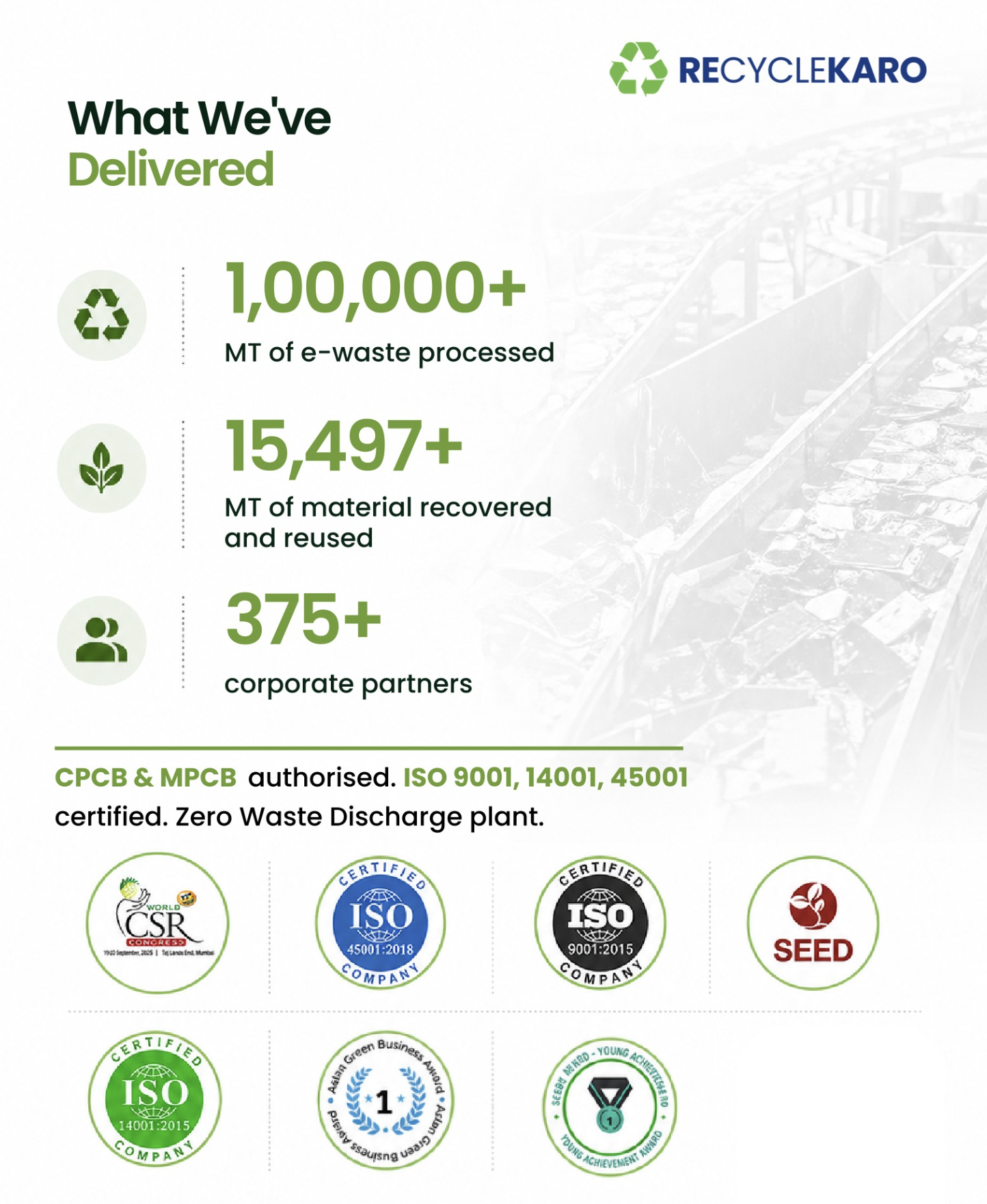
- India authorization: CPCB and State PCB (e.g., MPCB) authorization as a recycler/dismantler — non-negotiable for legal disposal under the E-Waste Rules.
- Operational quality & safety: ISO 9001 and ISO 45001.
A provider holding the full set demonstrates capability across data security, environmental compliance, and operational quality simultaneously.
How Do You Choose an ITAD Provider in India?
Evaluation checklist:
- CPCB/SPCB-authorized recycler with verifiable scope
- Serialized chain-of-custody documentation and per-asset Certificate of Data Destruction
- NIST 800-88-aligned destruction across all media types, including SSDs
- R2v3 / ISO 14001 environmental certification and EPR-compliant reporting
- Willingness to undergo third-party audit
- Operational capacity to handle enterprise volumes
Red flags:
- Certificates issued without serial-level detail
- Custody trail that ends at pickup
- Claimed certification without verifiable scope
- Default shredding that needlessly destroys resale value
How Much Does IT Asset Disposition Cost?
ITAD is typically priced per device or per volume, covering collection, transport, data destruction, and compliant disposal.
The figure that changes the equation is value recovery: assets that can be refurbished or remarketed generate credit that offsets disposal cost, and recovered materials carry residual value. Framed correctly for a CFO, mature ITAD is a risk-reduction and value-recovery program, not a line-item cost.
How RecycleKaro Delivers End-to-End ITAD in India
The challenge for most Indian enterprises is not awareness, it is finding one partner who can close the entire loop. Data destruction alone is not enough; EPR documentation alone is not enough.
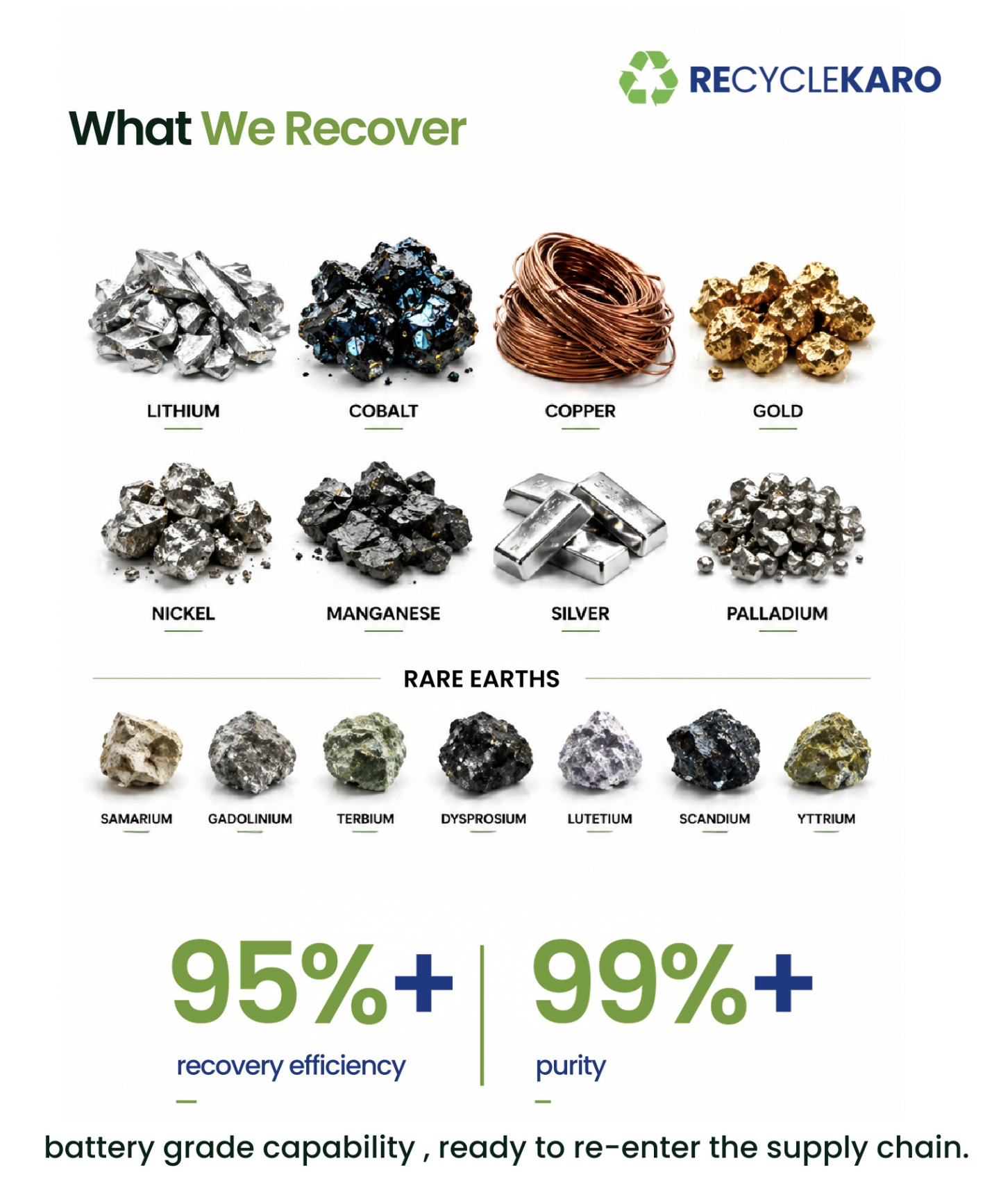
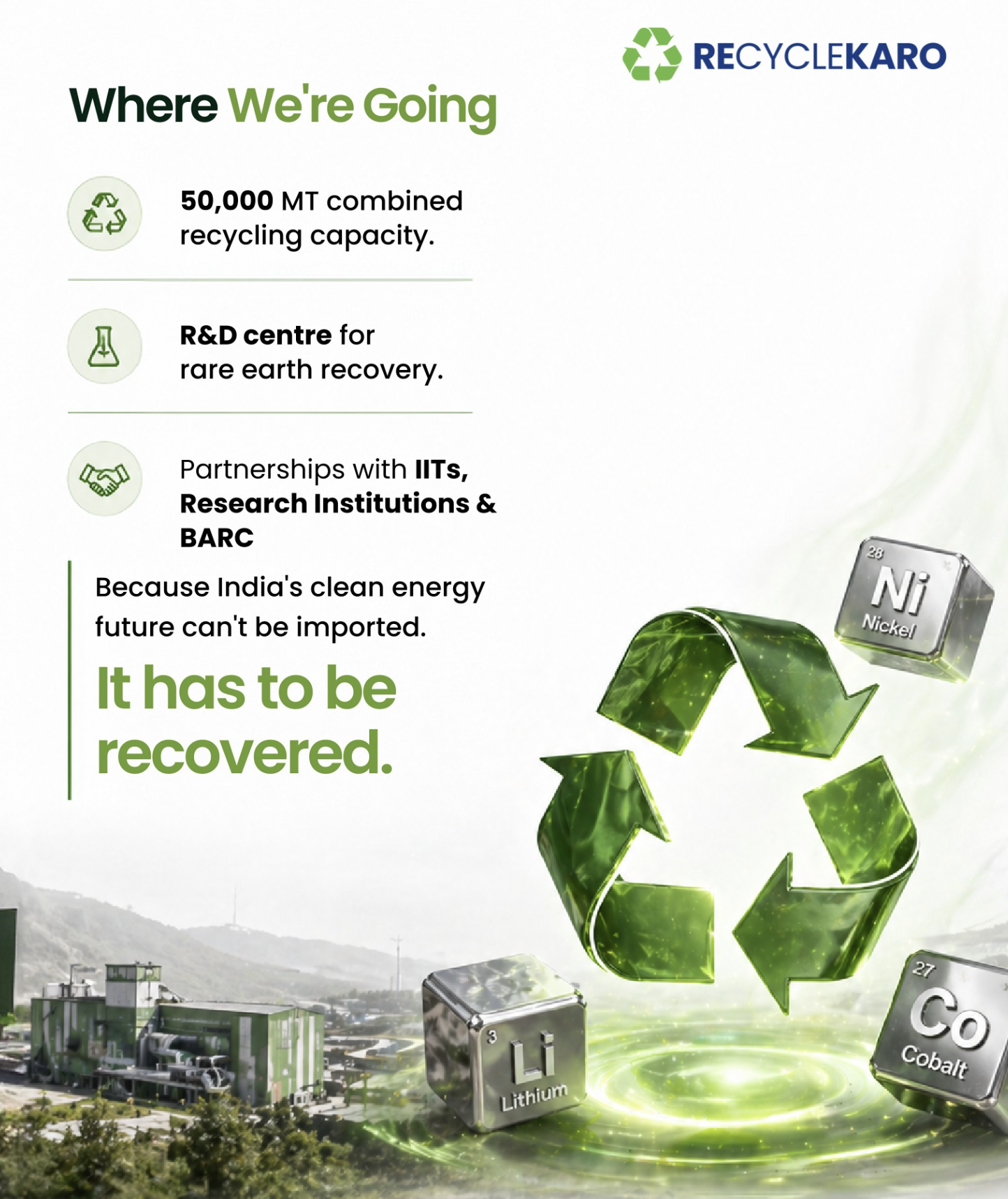
RecycleKaro is built to fill exactly that gap. As a CPCB- and MPCB-authorized recycler with end-to-end IT asset disposal capability, RecycleKaro handles the full lifecycle of a retiring corporate device – secure collection and chain-of-custody documentation, certified data destruction to recognized standards, and compliant dismantling with material recovery at its Palghar facility.
The organization receives a Certificate of Data Destruction for every asset and EPR-compliant disposal records for regulatory reporting, both obligations handled in one process.
For BFSI, healthcare, legal, and government-contracted IT, that documented custody and certified destruction provides the audit-ready evidence trail internal compliance teams and external auditors increasingly require. Recovered metals re-enter the supply chain rather than the landfill – the circular-economy outcome behind the materials RecycleKaro recovers.